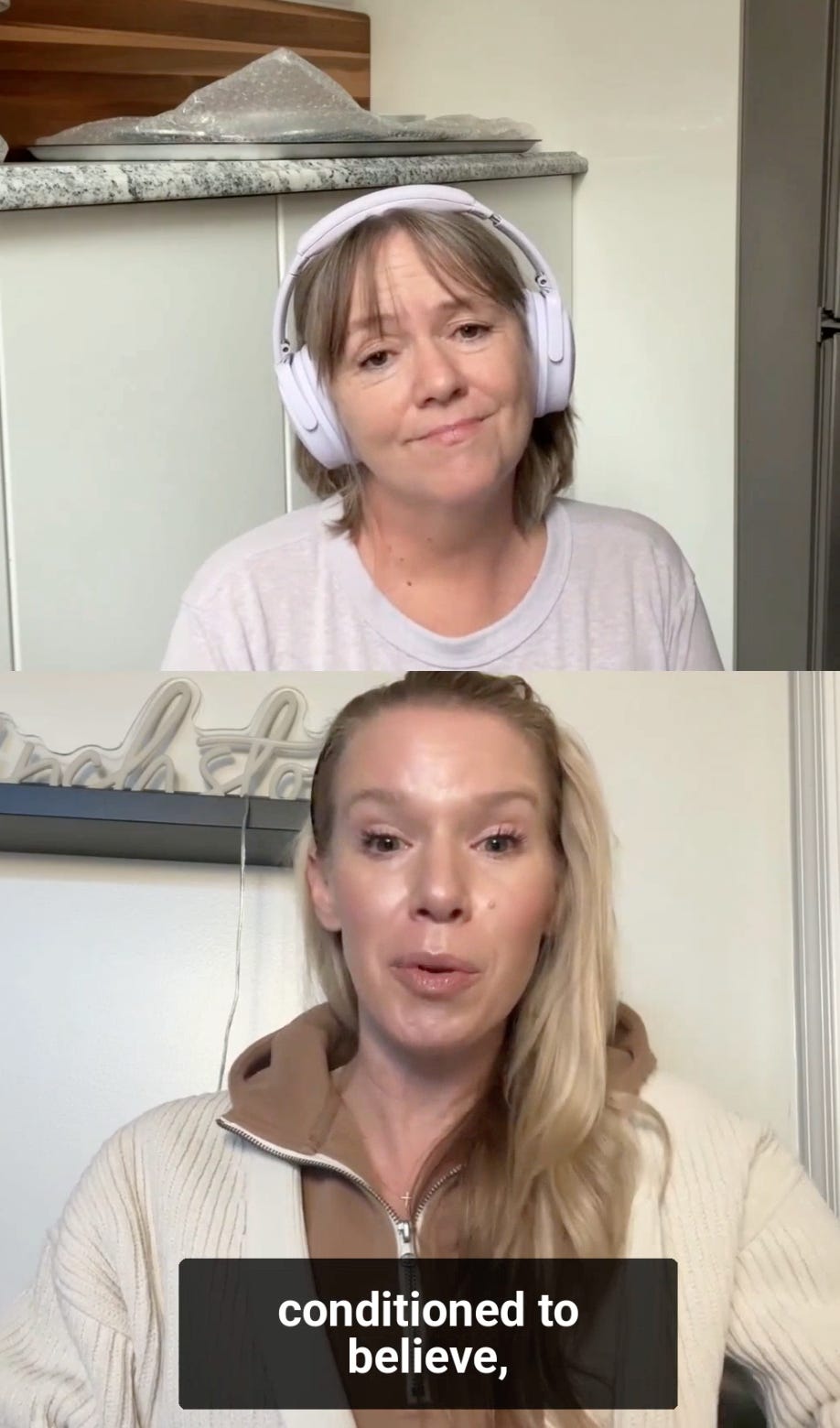
In this unfiltered conversation, Sarah | Profound Autism Mom and I talked through the nuances of neurodivergence, and what our kids actually need to survive.
“Fear isn’t unsafe. Discomfort isn’t unsafe. It’s where growth begins.”
🎧 Listen to this episode of Atypical Kids, Mindful Parents wherever you get your podcasts.
Together, we explored:
Long-form storytelling vs social media sound bytes
The myth of the “ideal child” and ambiguous grief
The tension between emotional narratives and clinical realities
How parents can regulate their own nervous systems and model resilience
The line between “deeply feeling” and clinically neurodivergent, and why it matters
How ableism, privilege, and bureaucracy shape access to support, and what we can do to fix the systems
What “profound autism” means to Sarah, and how it differs from other autism presentations
Finding meaning in unexpected parenting journeys
The power of compassionate conversation in a divided culture
Why community care and nervous system regulation are at the heart of survival for our families
“There’s no hierarchy of people, only shifting needs.”
If you’ve ever felt unseen in your parenting journey (or struggled to come to an understanding about ableism, diagnosis, or privilege without losing connection) this episode is an invitation to breathe with the discomfort without turning away.
When we parent neurodivergent kids, we’re constantly asked to make sense of things that don’t fit neatly into categories. Is this behavior a sensory need, a developmental delay, or just a human moment? Do we seek a diagnosis, risking judgment? How do we keep advocating calmly when the systems don’t see our kids’ full humanity?
These are the kinds of questions I explored with Sarah from Profound Autism Mom in a LIVE conversation on Atypical Kids, Mindful Parents. What unfolded wasn’t a debate, but a brave, layered dialogue about parenting, privilege, and what it means to live inside our own contradictions.
The Courage to Sit With Complexity
As parents, we crave clarity — yet the truth is rarely simple. Sarah and I talked about how social media often rewards polished narratives and sound bytes, while the lived reality of raising neurodivergent kids is anything but tidy.
Substack has become a refuge for both of us. It’s a place where nuance and vulnerability still have a home. “There’s a broader, holistic approach to humanity here,” Sarah said. “We can actually talk about the real lives behind the labels.”
We reflected on how the idea of the “deeply feeling kid” — popularized by Dr. Becky Kennedy — has both helped and hurt parents’ understanding of neurodivergence. While many find comfort in that language, others have seen it delay much-needed diagnoses and services.
On Fear, Grief, and Regulation
We talked about the emotional landscape of parenting — the ambiguous grief, fear, and anxiety that can feel almost primal. Fear is built into us for survival, but our modern systems keep us in fight-flight long after the danger has passed. The constant worry about safety, acceptance, and belonging wears down our nervous systems.
Mindful parenting isn’t about erasing those feelings. It’s about learning to regulate, to pause, to breathe — so we can respond instead of react.
Parenting in a Biased System
Sarah and I agreed that raising a child in this culture means working with a biased system. The structures meant to support families — education, healthcare, social services — replicate the inequities they’re supposed to address.
Through all of it, parents keep showing up. We keep loving, advocating, and adjusting. It’s not like we have a choice.
I’m an advocate for honoring the laws painstakingly won during the Disability Justice Movement of the 1970’s. I know strengthening the current systems, reducing red tape, and increasing funding would help our kids. Challenging my thinking, Sarah asked if it’s such a bad thing to do away with the entire Special Education System and begin rebuilding from the ground up.
What we both ultimately want is for every child with a disability to get the support they need. To have our kids fully accepted and cared for as they grow up, no matter what they end up contributing to society.
Independence, interdependence, and dependence are moving landmarks that have nothing to do with whether our kids are worthy of safety and care.
What Ableism Has to Do With It
The conversation naturally turned toward ableism. I shared my perspective: ableism is the water we swim in, a cultural bias that values productivity and conformity over care and diversity.
Sarah pushed back thoughtfully, asking what it looks like to move beyond naming ableism and into creating real systems of support. “We have to destroy the conditioning that keeps us stuck,” she said. “Families who need help the most don’t even know what’s available to them.”
We found common ground in the idea that resources are being hoarded by bureaucratic systems that were never designed for care. When we pit families against one another, everyone loses. When we dismantle shame and bias, everyone wins.
When raising kids in an ableist system, two things are true:
the urgency for systemic change, and
the mindful presence of everyday care.
When We Listen to Each Other
This conversation reminded me that:
We can disagree without disconnecting. True dialogue requires courage and humility.
Ableism and bias thrive in silence. Naming them is an act of love, not division.
There’s no one-size-fits-all approach. Every child, every family, every nervous system is unique.
Parenting is activism. Every time we advocate for understanding and inclusion, we chip away at systems that devalue care.
Finding Compassion in the Chaos
We didn’t have a neat conclusion — and that’s the point. This conversation invites you to pause, reflect, and notice where you might sit with complexity in your parenting, your advocacy, or your own self-understanding.
Parenting neurodivergent kids means holding paradoxes every day:
love and frustration,
grief and joy,
exhaustion and awe.
We can find meaning in the mess, compassion in the chaos, and presence in the unknown. When we sit with complexity, we create space for something new to emerge: creative collaborations that spark change. An emerging vision of a culture that values care, connection, and the full humanity of every child.
We’re right here with you.
🎧 Listen now: Atypical Kids, Mindful Parents Podcast